ISO 27001 Benefits for SaaS: Win Clients Faster

Why ISO 27001 is Essential for SaaS Companies Pursuing Enterprise Clients
For SaaS companies targeting enterprise buyers, ISO 27001 certification has evolved from a nice-to-have credential into a non-negotiable business enabler. Enterprise procurement teams increasingly mandate ISO 27001 during vendor evaluation, often disqualifying vendors who lack certification before technical discussions even begin. By demonstrating adherence to this globally recognised information security standard, SaaS providers gain immediate credibility, accelerate sales cycles, and differentiate themselves in crowded markets.
ISO 27001 establishes a comprehensive Information Security Management System (ISMS) that protects sensitive customer data - —addressing a core concern for enterprises evaluating SaaS partners. Certification reassures enterprise buyers that your organisation has undergone independent third-party audits, maintains robust security controls, and commits to continuous improvement. For fast-growing SaaS businesses, this translates directly into faster deal closures, access to higher-value contracts, and the ability to compete against established players.
The Competitive Advantages of ISO 27001 for SaaS Enterprise Sales
1. Accelerated Sales Cycles and Reduced Procurement Friction
One of the most tangible benefits of ISO 27001 certification is the dramatic reduction in time spent navigating enterprise security reviews. Without certification, SaaS vendors face 100–200-question security questionnaires, lengthy vendor risk assessments, and approval cycles stretching 4–12 weeks. ISO 27001 effectively shortcuts this process.
Enterprise procurement teams can treat the certification as pre-validated proof of security maturity. Rather than spending weeks answering granular questions about access controls, data encryption, incident response procedures, and business continuity planning, sales teams can point to their certification and supporting audit reports. Many enterprises reduce or entirely skip custom security questionnaires when presented with a valid ISO 27001 certificate, cutting vendor evaluation time by 70–90% in some cases.
And if enterprise procurement teams still insist on questionnaires, having certification can speed up the process of completing the questionnaire, since many of the responses can point to your ISO 27001 certification.
This acceleration matters because enterprise deals are time-sensitive. Competitors without certification remain stuck in protracted due diligence, while certified vendors move quickly to contract negotiations. For SaaS companies operating on tight fundraising or growth timelines, every quarter counts - —and ISO 27001 can deliver multiple quarters' worth of acceleration.
2. Mandatory Requirement for Enterprise and Regulated Industries
In practice, ISO 27001 certification is no longer optional for SaaS companies targeting Fortune 1000 enterprises, financial services, healthcare providers, or government agencies in Europe. These buyers operate under strict regulatory and risk management frameworks - —such as GDPR, HIPAA, and sector-specific compliance mandates or even their own ISO 27001 certification - —that require them to vet third-party vendors rigorously.
Many enterprise buyers now include ISO 27001 certification as a hard requirement in Requests for Proposal (RFPs) and vendor onboarding checklists. Lacking certification means automatic disqualification from these opportunities, regardless of product quality or pricing. For SaaS companies with international growth ambitions - —particularly expansion into EMEA (Europe, Middle East, Africa) and APAC (Asia-Pacific) markets - —ISO 27001 is virtually essential. UnlikeSOC 2, which is primarily recognised in North America, ISO 27001 enjoys universal recognition and acceptance.
This global recognition enables SaaS vendors to pursue contracts with multinational enterprises and avoid navigating fragmented regional security standards. If your growth strategy involves selling into Europe or Asia, ISO 27001 is the most efficient path to market access.
3. Differentiation in Crowded SaaS Markets
The SaaS market is intensely competitive, with dozens of vendors often competing for the same enterprise accounts. ISO 27001 certification provides a clear, defensible differentiator that signals operational maturity and security leadership.
For smaller or mid-sized SaaS companies competing against established incumbents, certification helps level the playing field. Enterprise buyers weighing options between a certified startup and a larger but uncertified competitor often favour the certified vendor, particularly when security and data protection are top concerns. Certification transforms security from a defensive conversation - —where sales teams reactively answer objections - —into a proactive sales asset that can be highlighted in marketing materials, pitch decks, and Trust Centres.
Beyond competitive positioning, certification also supports premium pricing strategies. Enterprise buyers are more willing to pay higher subscription fees for vendors who demonstrably reduce their operational risk. By positioning ISO 27001 as part of a broader commitment to information security excellence, SaaS companies can justify premium tiers and avoid competing solely on price.
4. Increased Customer Trust and Long-Term Retention
Enterprise clients view their SaaS vendors as extensions of their own security infrastructure. A data breach or security incident at a vendor can trigger massive financial, regulatory, and reputational consequences for the enterprise buyer. ISO 27001 certification provides ongoing assurance that the SaaS provider takes information security seriously and maintains controls that are regularly audited.
This trust matters not just during the initial sale, but throughout the customer lifecycle. Enterprise clients with strict compliance obligations must periodically review their vendor relationships. Certified vendors pass these reviews efficiently, while uncertified vendors face renewed scrutiny, questionnaires, and potential contract termination. ISO 27001 certification - —particularly the annual surveillance audits required to maintain certification - —demonstrates continuous commitment to security improvement, strengthening retention and reducing churn.
Customer trust also manifests in referrals and case studies. Enterprise clients are more willing to serve as references for certified vendors, accelerating sales cycles with other prospects.
5. Alignment with Regulatory and Legal Compliance Frameworks
ISO 27001 is designed to align with major data protection regulations, including GDPR (General Data Protection Regulation), HIPAA (Health Insurance Portability and Accountability Act), and emerging privacy laws. By implementing ISO 27001 controls, SaaS companies simultaneously address many regulatory requirements, reducing the complexity of multi-framework compliance.
For example, ISO 27001 Annex A includes controls for data encryption, access management, incident response, and business continuity - —all of which are core requirements under GDPR. This overlap means that SaaS companies pursuing ISO 27001 can streamline their path to GDPR compliance and avoid building entirely separate compliance programmes. Enterprises operating in regulated industries appreciate this alignment, as it reduces their own third-party risk exposure and simplifies vendor governance.
Additionally, ISO 27001 certification protects SaaS companies from legal and financial penalties associated with data breaches. The average cost of a data breach in 2023 reached £3.5 million globally, not including reputational damage and customer attrition. By implementing ISO 27001 controls - —such as robust access controls, vulnerability management, and incident detection - —SaaS providers significantly reduce the likelihood and impact of breaches.
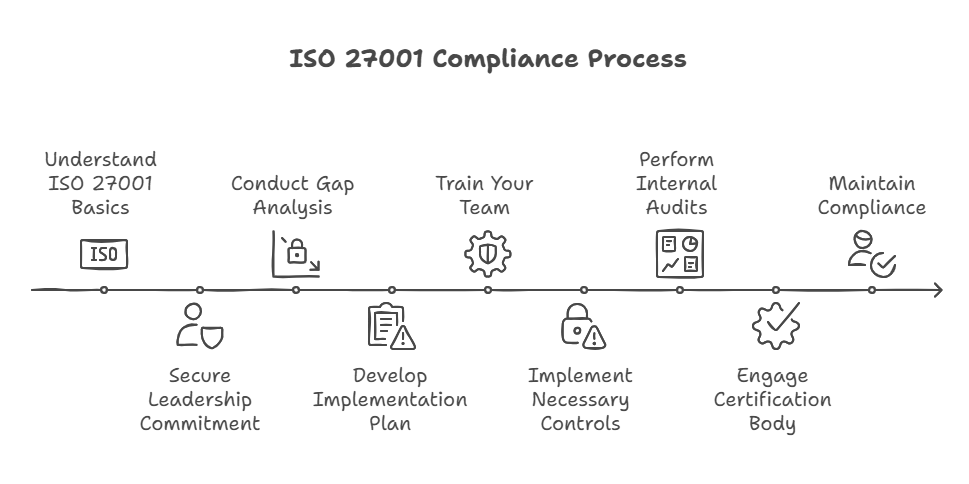
Key Steps to Achieve ISO 27001 Compliance for SaaS Companies
1. Understand the Basics and Scope Your ISMS
ISO 27001 centres on establishing, implementing, maintaining, and improving an Information Security Management System (ISMS). For SaaS companies, understanding the standard's structure is the first step:
- Context of the Organisation: Identify internal and external factors affecting information security, including industry-specific risks, customer requirements, and stakeholder expectations. SaaS companies handling healthcare data, for example, must prioritise HIPAA alignment alongside ISO 27001.
- Risk Assessment and Treatment: Identify threats to information assets - —such as data breaches, service disruptions, or insider threats - —assess their likelihood and impact, and implement appropriate controls to mitigate risks.
- Continuous Improvement: ISO 27001 requires organisations to regularly review and refine their ISMS to address emerging threats and evolving business needs. Many SaaS companies establish quarterly review cycles.
When scoping the ISMS, SaaS companies should focus initially on the core product, engineering teams, and infrastructure directly involved in delivering services to enterprise clients. Limiting scope to essential operations speeds up certification while maintaining meaningful security coverage. Additional business units - —such as marketing or finance - —can be added to the scope in later surveillance audits.
2. Secure Leadership Commitment and Allocate Resources
Top-level support from founders, the CEO, and the executive team is critical for ISO 27001 success. Leadership must allocate an adequate budget, assign dedicated personnel (such as an Information Security Manager or ISO 27001 project lead), and establish an information security policy that reflects the organisation's commitment to protecting customer data.
Without leadership buy-in, ISO 27001 projects often stall due to competing priorities, insufficient resources, or a lack of cross-functional collaboration. Securing executive sponsorship ensures that information security becomes embedded in company culture and strategic planning.
3. Conduct a Gap Analysis
A gap analysis evaluates your current security posture against ISO 27001 requirements, identifying areas that require improvement. This includes reviewing existing policies, procedures, and controls across key areas:
- Access Controls: Ensure role-based access control (RBAC) and least privilege principles are applied. For example, developers should only access environments they work on, reducing risk exposure.
- Data Encryption: Implement encryption for data at rest and in transit using protocols such as TLS 1.2+ and AES-256.
- Incident Response Plans: Develop and test robust plans to detect, respond to, and recover from security incidents. Conducting simulated drills enhances preparedness.
- Vulnerability Management: Establish processes for identifying, assessing, and patching technical vulnerabilities in applications and infrastructure.
For SaaS companies already operating on cloud platforms like AWS, Google Cloud, or Azure, many foundational controls - —such as physical security and network infrastructure - —are inherited from the cloud provider. However, responsibility for application-level security, identity and access management, and data protection remains with the SaaS provider.
4. Develop an Implementation Plan
Based on the gap analysis, create a detailed implementation plan that includes:
- Resource Allocation: Assign personnel, tools, and budgets to address identified gaps. This may involve hiring a dedicated ISO 27001 project manager or engaging an external consultant.
- Milestones and Deadlines: Set realistic timelines for achieving specific objectives, such as completing internal audits, finalising documentation, and conducting management reviews. SaaS startups typically aim for certification within 3–6 months.
- Accountability: Assign ownership of tasks to ensure progress tracking. Use project management tools to monitor each phase of implementation.
Tempo Audits can also connect customers with GRC (Governance, Risk, and Compliance) platforms or ISO 27001 automation tools to streamline evidence collection and control monitoring. Alternatively, we can recommend experienced consultants to provide tailored guidance. Book a call to explore these options and receive personalised recommendations..
5. Train Your Team on Information Security Best Practices
Raising awareness about ISO 27001 across the organisation is essential. Tailor training to specific roles:
- Security Best Practices: Educate employees on secure data handling, password hygiene, recognising phishing attempts, and reporting suspicious activity. Gamifying security awareness training can increase engagement.
- Incident Reporting: Establish clear, anonymous reporting mechanisms to encourage employees to promptly report security concerns or breaches.
- Role-Specific Training: Provide detailed training for engineering, DevOps, IT, legal, and compliance teams. For example, DevOps teams should receive guidance on securing CI/CD pipelines, while customer success teams should understand data privacy obligations.
6. Implement Necessary Controls from Annex A
ISO 27001 includes 93 controls in Annex A, grouped into organisational, people, physical, and technological categories. Key examples for SaaS companies include:
- Network Security Configurations: Use firewalls, intrusion detection systems (IDS), and secure VPNs to protect network integrity. Implement network segmentation to reduce attack surfaces.
- Access Control (A.5.15–5.18): Implement multi-factor authentication (MFA), enforce password policies, and regularly review user access privileges.
- Data Protection (A.8.24): Encrypt sensitive data at rest and in transit. Use tokenisation or masking for particularly sensitive fields.
- Business Continuity Management (A.5.29–5.30): Establish disaster recovery plans and regularly test them to ensure minimal service disruption during incidents.
Modern SaaS companies often rely on cloud providers (AWS, Azure, GCP) that already meet physical security requirements. Focus should shift to application-layer controls, API security, secure coding practices, and continuous monitoring.
7. Perform Internal Audits
Conduct regular internal audits to evaluate the ISMS's effectiveness before engaging a certification body. Partnering with experienced firms like Tempo Audits can provide:
- Bespoke Audit Plans: Tailored audits addressing unique business risks. For example, SaaS companies offering financial services may prioritise transaction integrity controls.
- Detailed Reports: Actionable insights and recommendations to enhance compliance.
- Mock Audit Sessions: Practice sessions to prepare teams for formal certification audits, reducing audit anxiety and identifying gaps early.
Tempo Audits specialises in conducting efficient, remote-first internal audits designed around the needs of modern SaaS businesses. Get in touch with us to schedule your internal audit today.
8. Engage a Certification Body for Stage 1 and Stage 2 Audits
Choose a reputable certification body to conduct the final audit - make sure you validate their accreditation (and consider which accreditation works for your client base). Modern providers, such as Tempo Audits, offer:
- Remote-First Audits: Flexible, efficient certification processes using modern technologies, reducing logistical challenges and travel costs.
- Streamlined Communication: Fast quotes and minimal bureaucracy to simplify the experience.
- Expert Auditors: Professionals who understand the nuances of SaaS businesses and cloud architectures, providing insights beyond basic compliance.
The certification process typically includes two stages:
- Stage 1 Audit: A preliminary review of ISMS documentation to assess readiness and identify gaps.
- Stage 2 Audit: A comprehensive evaluation of the ISMS in operation, including testing of controls, interviews with personnel, and evidence review. Successful completion leads to certification.
Book a free discovery call with Tempo Audits to understand how our certification process works and how we can support your ISO 27001 journey.
9. Maintain Compliance Through Surveillance Audits
ISO 27001 is a three-year certification that requires annual surveillance audits to ensure ongoing adherence to the standard. To maintain compliance:
- Surveillance Audits: Conduct annual audits focusing on key controls, emerging risks, and changes to the ISMS. These audits are shorter and less intensive than the initial Stage 2 audit.
- Risk Assessments: Regularly reassess risks as your SaaS product evolves, new threats emerge, and your customer base grows. Update your risk register and treatment plans accordingly.
- ISMS Updates: Continuously refine policies, procedures, and controls to adapt to business changes, regulatory updates, and lessons learned from incidents or audits.
Surveillance audits demonstrate to enterprise clients that your commitment to information security is sustained, not a one-time effort. This ongoing validation strengthens customer confidence and supports contract renewals.
ISO 27001 Certification Timeline for SaaS Companies
The typical timeline for ISO 27001 certification varies based on organisational maturity, existing security frameworks, and resource allocation:
- Preparation (3–6 Months for SaaS Startups): Depending on your starting point, this phase involves scoping the ISMS, conducting gap analysis, implementing controls, and preparing documentation. SaaS companies with existing frameworks - such as SOC 2 Type 2 or robust internal security practices —often complete preparation in 3–4 months. Using GRC automation platforms (such as Vanta, Drata, or Sprinto) can further accelerate evidence collection and control monitoring.
- Internal Audit (2–4 Weeks): A thorough review of the ISMS to identify and address issues before the certification audit. This phase helps teams understand what auditors will evaluate and builds confidence.
- Stage 1 Audit (1–2 Weeks): A preliminary review conducted by the certification body to assess documentation readiness and confirm that the ISMS scope is appropriate.
- Stage 2 Audit (1–2 Weeks): A comprehensive evaluation of the ISMS in operation, leading to certification if successful. Auditors test controls, interview personnel, and review evidence of continuous improvement.
Tempo Audits customers often complete the full certification journey in 3–6 months, with particularly well-prepared organisations achieving certification in as little as 3 months. Contact us today to receive a fast quote and discuss your timeline.
ISO 27001 vs. Other SaaS Cybersecurity Certifications
While SOC 2, HIPAA, and other frameworks are valuable, ISO 27001 offers distinct advantages for SaaS companies targeting enterprise clients:
- Global Recognition: ISO 27001 is recognised internationally, making it ideal for SaaS providers with global customer bases or expansion plans into EMEA and APAC markets. SOC 2, by contrast, is primarily used in North America.
- Comprehensive Approach: ISO 27001 provides a holistic framework for managing information security across people, processes, and technology. It addresses not just technical controls, but also governance, risk management, and continuous improvement.
- Alignment with Other Standards: ISO 27001 shares many controls with SOC 2, GDPR, and other frameworks, enabling efficient dual-certification efforts. SaaS companies pursuing both ISO 27001 and SOC 2 often find significant overlap, reducing the incremental effort required for the second certification.
- Vendor Credibility: For enterprise buyers, ISO 27001 carries significant weight as an internationally recognised standard backed by accredited certification bodies. This credibility often exceeds that of vendor-specific or regional frameworks.
For SaaS companies unsure whether to pursue ISO 27001 or SOC 2 first, the answer often depends on target markets. If your enterprise prospects are primarily in North America, SOC 2 may be prioritised. If you are targeting international markets or multinational enterprises, ISO 27001 is the more strategic choice. Many SaaS companies ultimately pursue both certifications to maximise market access.
Investing in ISO 27001: A Strategic Imperative for SaaS Growth
Achieving ISO 27001 certification requires commitment, but the benefits for SaaS companies pursuing enterprise clients are substantial and measurable. Certification accelerates sales cycles, differentiates your company in competitive markets, builds long-term customer trust, and ensures alignment with regulatory requirements. For fast-growing SaaS businesses, ISO 27001 is not just a compliance exercise - it is a revenue enabler and a competitive weapon.
With modern certification bodies like Tempo Audits, the process can be efficient, tailored to the realities of SaaS operations, and completed in as little as 3–6 months. Our remote-first, tech-savvy approach ensures that certification fits seamlessly into your growth plans, rather than slowing them down.
Contact Tempo Audits today to receive a fast quote, schedule a consultation, or learn more about our streamlined, remote-first audit process. Let us help you achieve and maintain ISO 27001 certification with confidence - and unlock the enterprise clients that will drive your next phase of growth.


Book a call
No forms, no faff – just a conversation and a quote. Prefer to skip straight to it? Fill out the application form and we'll get moving.
Alternatively, if you have all the details,
fill out this form here.